When Ruth Cockburn arrived in a former mill town in Lancashire to research a new comedy theatre show she was surprised to find more independent shops than a hipster could write a blog about and even more surprised to find they were all owned by women. She walks Antonia Charlesworth down the aisle that leads from these young entrepreneurs to one former mill girl from the same town. Photos: Claire Griffiths
Ruth Cockburn and Keith Carter met when they were both looking for a circuit breaker. They weren’t in a hardware store but the pubs and clubs of Northern England and beyond, where they both delivered stand up sets, increasingly wearily written as crowd pleasers. Mostly they worked, but sometimes the crowd was preoccupied – usually with the bar, but occasionally with a rival group who they had plans for in the carpark afterwards.
Coming together Carter, from Liverpool, and Cockburn, from Blackpool formed Black Liver – a musical comedy duo who pen songs with titles like Cokehead Lullaby “are you shaking comfortably?”, the Ballard of the Cool Teenager, and Whatever Happened to Keeping Budgies? Breaking away from the gigging circuit, they set their satirical eye on penning and performing musical comedy theatre. The first, Support Your Local Library: A Gothic Pub Rock Opera was a twisted tale about the fictional town of Little Hope and its image obsessed occupants whose lives are shaken up by the arrival of a new librarian.
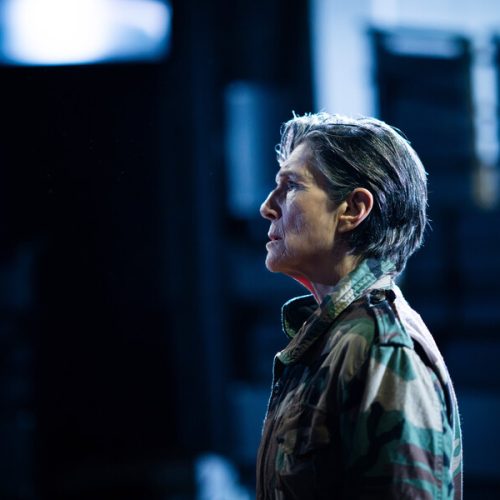
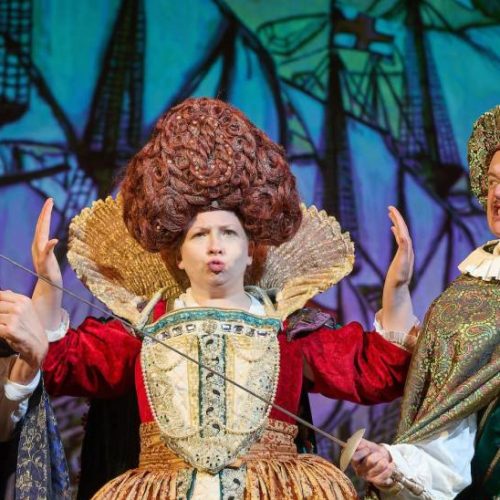
Now they are touring Miss Nobodies, a funny, uplifting play about a little shop in a little town and the larger-than-life women that pass through it from 1919 to the present day. Mixing storytelling with sketches, songs and poetry, the show was originally commissioned by Spot On Lancashire and was inspired by the real stories of women currently living and working in Great Harwood, and one former resident in particular – Ethel Carnie Holdsworth, the mill worker and socialist campaigner who’s celebrated as the first working-class female novelist.
“I first came across Ethel Carnie Holdsworth through the Pendle Radicals from Mid Pennine Arts, who championed her with an unofficial blue plaque,” explains Cockburn. “I decided to read up on her so we went to the Working Class Movement Library in Salford and realised she was a funny writer. Her turn of phrase was so funny, it was like reading Jenny Eclair, and she had all the colloquialisms that you wouldn’t hear now. I just thought it was really interesting.”
The stage show Miss Nobodies, and an accompanying eponymous book featuring poetry from Cockburn, Carnie Holdsworth, and quotes from the women of Great Harwood, is a nod to the novelist’s first book, Miss Nobody.
Cockburn believes the title refers to the fact the heroine is a person of “no heritage” who is struggling to find her place in the world alone. Her own Miss Nobodies are “the many women forging their own path, with help from their community rather than inherited wealth, learning life’s lessons by being brave, resilient and outspoken and teaching the next generation of women to do the same. Teaching them how to be heard.”
In researching the project she found many women who still don’t believe their stories are worth telling, however.
“I interviewed Ethel Carnie Holdsworth’s great niece and she talked to me for a good hour about her aunt and at the end I said, ‘so just tell me about yourself’,” says Cockburn. “She was self-deprecating, ‘I’m just a housewife’. She was in her 80s, maybe 90s, but it turned out she had been a designer and travelled all over the world. She was so nonchalant.” Cockburn had the same experience when she visited Great Harwood for community outreach-based research for the project.
“It was like that in the U3A and when we visited a yoga class. All the women there were like, ‘Oh, I don’t know. I don’t know what you want. I don’t know’. And then after about an hour and a half of chatting, it was just like story story story.”
Set over 100 years, Miss Nobodies begins with present-day couple, Frank and Colleen, who are hosting a fundraiser to reopen an empty shop on Great Harwood’s high street. From there Carter and Cockburn play a host of characters throughout the shop’s history – from the iron mongers who established it to the skiffle band who played there in the 60s.
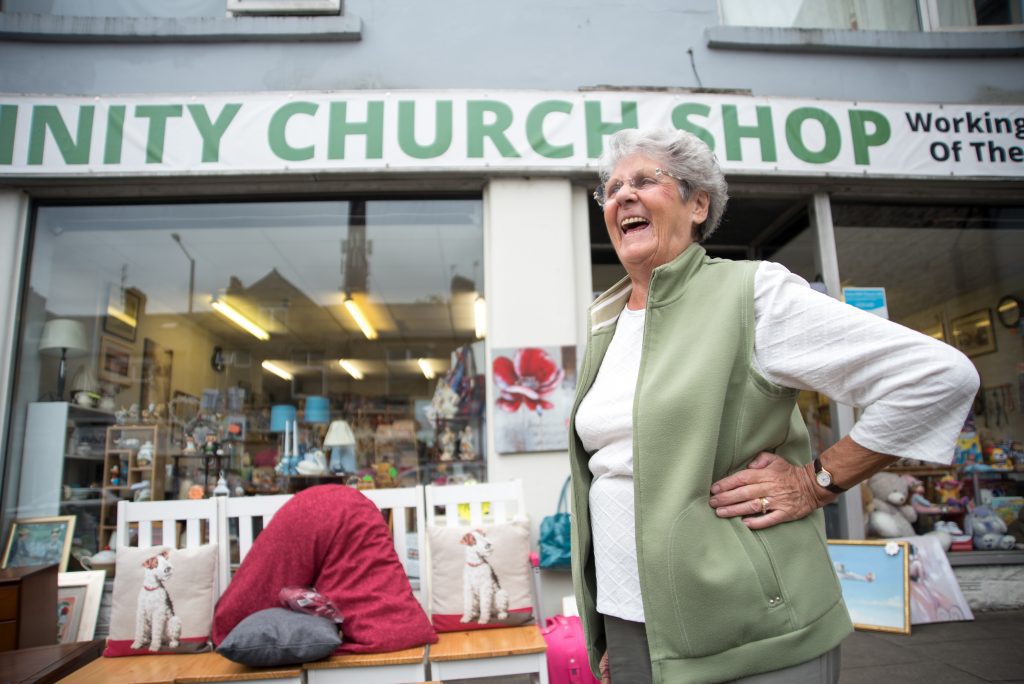
“It was inspired by the high street in Great Harwood where, like all high streets, we found a few empty shops but also a lot of independent businesses run by women,” says Cockburn.
“There was real solidarity between all these women together,” adds Carter. “In the female-owned bakery we were told some of the male business owners don’t like it and won’t help them at all, so they stick together.”
“Lancashire women are fierce, I think it’s that Northern attitude, we’re very resilient.”
“And because they’re young business owners,” adds Cockburn, “they’re online, on social media, they’re savvy. That bakery – Finches – had a cook book on the Sunday Times bestseller book list. Every day the cheese shop is posting like really fancy things on social media. They’re really hard working and that has followed through from the generations of the women before them.”
It’s a theme that reveals itself throughout both the book and the show, in which quotes from real women in the town are woven.
“I think women have worked a lot longer in terms of years in Lancashire, more than they have perhaps in the rest of the country” said one woman in the yoga class. “I’m 72 and my grandma worked, my mother worked, and I’ve worked. They worked in the mills. They had to. That’s perhaps what makes Lancashire women so strong.”
Sisters and bakery owners Lauren and Rachel Finch had a different experience but a similar outlook.
“Lancashire women are fierce, I think it’s that Northern attitude, we’re very resilient… our mum didn’t work when we were growing up, it was just Dad going to work and a lot of our friends are the same. But that’s not the case anymore and women are leading the way running their own businesses.”
But Carter insists the material never veers into: “‘Ee-by-gum, we’ve got nothin’ but were ‘appy” territory.
“We don’t use stereotypes in Miss Nobodies, far from it,” he says. “We use things that people might perceive as one thing and then the story changes.”
“That’s why it’s so important to use real women’s voices,” adds Cockburn. “They all came to the opening night in Great Harwood Library and it was really nice seeing them all in the audience.” The show has been touring on and off since and Cockburn admits she wasn’t sure how well the material would go down outside of the North.
“We were down in Kent and I was thinking, is this going to be too Northern? Are they gonna get it? And they did. It didn’t jar.
“The jokes go down well everywhere, it’s just what they take away from it that’s different place to place,” she adds. “Generally we want them to go away and talk to each other. Talk to each other and listen to each others stories.”
Miss Nobodies is at Burnley Mechanicals 25 Sept, Wash Your Words Blackpool 29 Sept, Darlington 1 Oct (venue TBC), and Farsley Constitutional 7 Oct. It tours again from February starting at Keswick’s Theatre by the Lake. For further your details or to buy a copy of the accompanying book visit ruthecockburn.co.uk
Great Harwood
By Ruth E Cockburn
from Miss Nobodies

If you want to hear the facts about Great Harwood, I can tell you that it has a population of 10,800 according to the 2011 census, it is a small market town with a long history of factory and mill work.
The Town Clock and Great Hall pay tribute to John Mercer, the famous dye and fabric chemist, who is cited as being the father of the town and responsible for bringing industry to the area.
It was once the home of the OXO factory, Rishy crisps and more cotton mills than Fred Dibnah could shake a rollie cigarette at.
It is now home to Morrisons, Tesco, Aldi, Dominos and more independent shops than a hipster could write a blog about.
But the real story of Great Harwood is in the people.
It’s not a building that makes a town,
it’s not a community centre or the Rose and Crown,
it’s a place that you can call home.
When the people there call you ‘one of their own’.
You don’t have to be born there or even fit in,
you just know that they’ll prop you up when you’re down or claim
you when you win.
Home is the place you’re missed if you’re not there.
Where people care.
The town will be there when we’re gone,
but our stories and our definitions of right and wrong,
will go on,
whether we want them to or not.
History repeats itself over again,
like a quantum loop that never quite stays the same.
We can’t stand in the way of progress but you can kick up a fuss,
And with any luck that progress will move our way.
This article originally appeared in Big Issue North. You can buy a copy of the weekly magazine from The Old Electric