As the town goes through to the final four in the City of Culture 2029 competition we find out what local people who helped shape the bid want from it.
Blackpool has been shortlisted for UK City of Culture 2029, joining Wrexham, Sheffield and Milton Keynes in the final four of the competition.
The announcement follows the Expert Advisory Panel’s assessment of the longlisted bids. Its chair, Sir Phil Redmond, praised Blackpool’s “highly creative and compelling bid”, highlighting its vision and concept and its commitment to community engagement among its strengths.
He noted that the bid embraced a broad definition of culture, and that its bold celebration of working-class culture was felt to be “refreshing and different”. The panel was also excited by the proposed programme for the City of Culture year, which it felt contained high-quality, compelling projects and big “showstopper” moments.
The bid team will now receive detailed feedback from the panel, who will visit the town in early December to get a better understanding of the bid. Blackpool will then be invited to make a final presentation to the panel in January, with the winner announced shortly after.
The winner will receive a £10m prize from the Department for Culture, Media and Sport (DCMS), and the three runners-up will receive £125,000 to take forward some elements of their bid.
If successful, our year of culture would include four distinctive public propositions with sustained participation, learning, health, skills, sector development and infrastructure:
- We’ll Show You will present Blackpool’s culture at its most ambitious-from major performance and immersive spectacle to dance, music, broadcasting and artist-led interventions.
- The Welcome Inn will build on Blackpool’s traditions of hospitality, exchange and shared enjoyment.
- Sea Change will connect culture with care for people, communities and the environment.
- It’s Like Blackpool Illuminations in Here! will use the 150th anniversary of the Illuminations to connect local participation with international artistic and technological innovation.
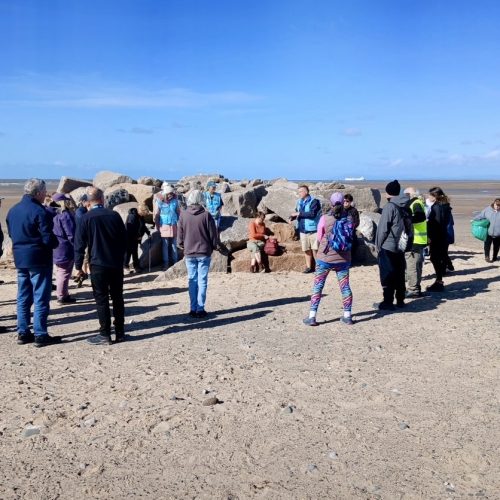
In the lead up to the bid this summer, Aunty Social hosted a series of Culture Chats, inviting residents to talk about what culture means in Blackpool, and what they would want from a City of Culture year.
It was one of eight projects commissioned by Creative Blackpool using funds from the initial City of Culture grant given to develop the bid. The conversations shared here helped inform it.

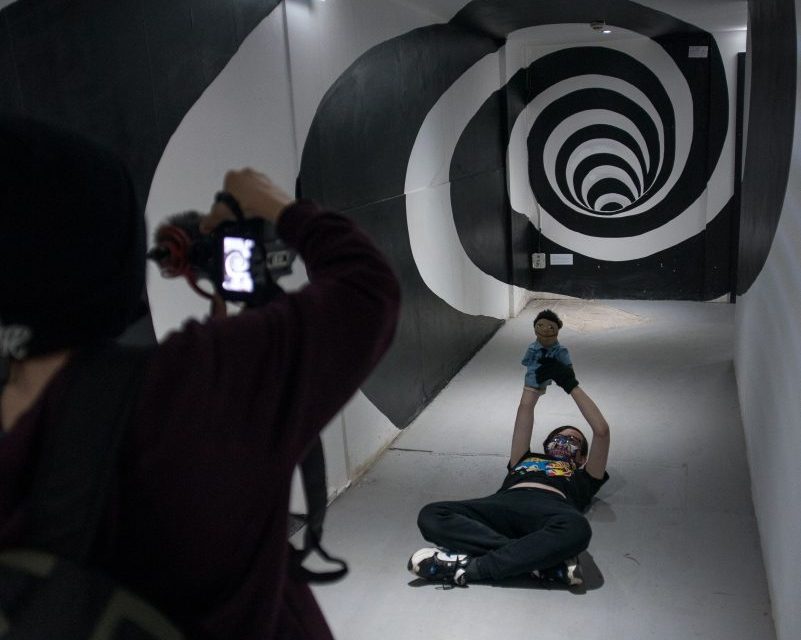
“Culture means a shared vision”
“For me, culture is about building relationships through shared experiences, in whatever format that takes,” one resident told Aunty, when asked to define it.
For another, it was “arts, literature, culture, heritage, galleries, museums, all of the things that make life really interesting. Things that make life not a 9-to-5 capitalist nightmare every day.”
A third described it as joy: “the things that give you lift in your life or give you flow or that inspire you. For me, it’s that ‘added extra’, but it’s extra, it is actually integral.”
“Culture is not just art, it’s about a shared vision that includes everybody.”
One resident said this when speaking about the need for the town to embrace its growing diversity.


“No one bats an eye because it’s Blackpool”
“It’s an average Friday to see Batman and Robin and a load of Tellytubbies on your way to work,” said one resident when asked about Blackpool’s image.
Another recalled walking to work at quarter past eight and seeing “six guys all dressed up as different coloured crayons for some reason”.
“It was crayons this week and then it would be nuns the next week. What of it?”
The town’s queer scene came up again and again. One resident described a Pride event on a gravel car park, where drag queen Roxy sang Hey Jude in the pouring rain.
“You could tell how windy it was because her boa was horizontal. Have you seen ‘Hey Jude’ sang at 2 o’clock in the afternoon on a gravel car park?”
For some, that sense of difference is the point.
“You’ve got the bizarre and the interesting, and there’s a really rich history of that in Blackpool… no one really bats an eye because it’s Blackpool.”


“Are you from Blackpool? Oh, it’s safe to go outside?”
Residents were also frank about how the town is seen from outside.
“I think it gets such a bad press, Blackpool,” said one. “When you talk to people and they say, ‘Are you from Blackpool? Oh, it’s safe to go outside?’”
One pointed out that it’s “way harder to get a good news story out, people want to punch down.
“I’ve never really understood that, why would that be the case? In a place which is actually doing a lot in spite of the labels… we’re actually doing amazing things.”
Some saw the title as a chance to change the narrative.
“I think if we get The City of Culture, people are going to realise, this looks cracking,” said one resident, pointing to what happened in Hull and Bradford. “It’s about pushing that and getting the real Blackpool out there, because a lot of people just go on YouTube and see the clickbait videos.”
And, as another put it: “Can you go ice skating or on the waltzers in your hometown? No, you can’t!”

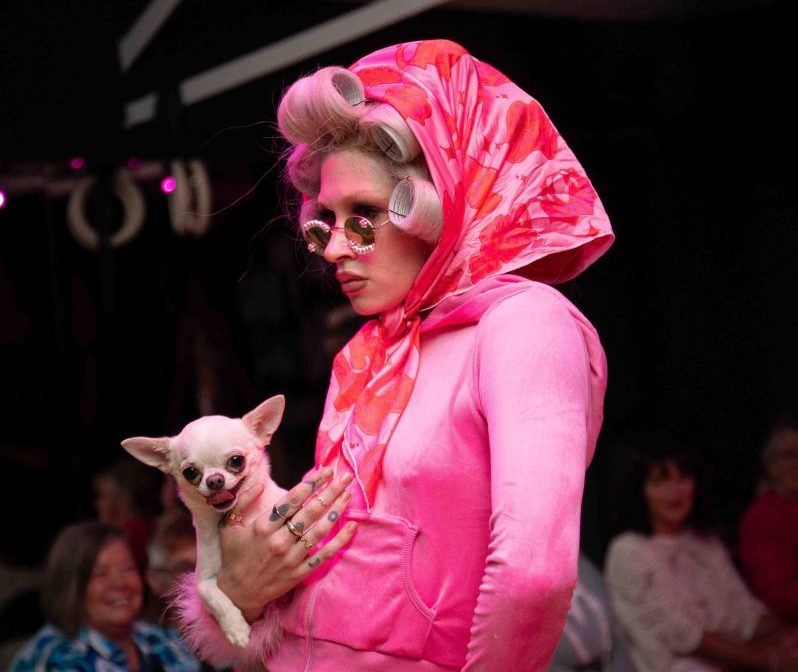
“Everyone’s welcome”
“People feel like they can come to Blackpool from anywhere and fit in,” said one person who was not born here but has made Blackpool their home. “It doesn’t matter whether you’ve lived here all your life or you’ve just turned up, there’s room for you. You can be your authentic self, because there’s that lack of sort of snobbery. Lack of judgement.”
Another recalled chatting to a person in the corner shop who they didn’t know for a solid 10 minutes recently.
“We were having a proper chat. My ex-boyfriend from London said, ‘Why are you talking to them?’ I was like, ‘Because I can and it’s nice’. That’s what it means to be northern, I think.”
Another put the town’s character this way:
“We are sound. We are welcoming. We’re a hospitable town. We’re an entertaining town. We’re a funny town.”


“Investment in the town and its people”
When the conversation turned to what a City of Culture year could mean, one message came through most clearly: invest in the people already doing the work.
“We have grafters in Blackpool, and I don’t know if people outside of the creative community are aware of that,” said one. “This could be a really good opportunity for people to come out of the woodwork, and for people who maybe haven’t had the time or the capacity or the support to have a seat at the table.”
“There is a wealth of talent here in Blackpool that just needs some support,” said another. “There’s already people doing excellent work that have already slogged their guts out for little tiny pots of money. They are producers, they are costume makers, they are directors, they are doing every part and every aspect of the work to make it work.”
One resident was clear about what this competition means:
“In terms of City of Culture for Blackpool, it’s about the investment in the town and its people, and not about having other people come in and do stuff for us. That’s really key for me.”
Others were thinking beyond the title year.
“It’s also about the legacy. This is investment for a year, but what do we do after that?”
Another, talking about the prize money, was confident:
“With who we are and how we hustle, we could turn it into 100 million without a shadow of a doubt.”


What people want to see
Residents’ wishes were practical as well as grand. One wanted “all those little buildings” turned into art studios. Another asked for “more public art taking up spaces that it wouldn’t usually be”. A theatre fan hoped for “big stories on stage in a big way, to allow us to see more spectacle that’s homemade and also queer and weird”.
Several spoke about everyday access.
“As a mother of a young child, I’m looking for things,” said one. “We’ve got a very amusement-based town, and that’s fine. There’s a lot of things to do for tourists, but I don’t know what’s actually here for families that live here.”
Another said: “If you’ve got a lot of people that can’t afford to go to the theatre, then they don’t experience what theatre can do – how it can tell a story that moves people?”
And the coast was never far from the conversation.
One resident remembered that “everyone used to come here for health and wealth”, adding: “Now you can’t even swim in your own sea because you’ll get E. coli.”
For young people, one resident hoped a City of Culture year might help them “see the potential here. They don’t need to move away.”
Another put it more gently: “It’s less about making people stay and more about saying, ‘Come home.’”
What happens next
There is still a long way to go. The panel’s visit in early December and the final presentation in January will decide whether Blackpool will become UK City of Culture 2029.
For the people who took part in the Culture Chats, the ambition is simple.
“We can do it all here, just give it us all.”