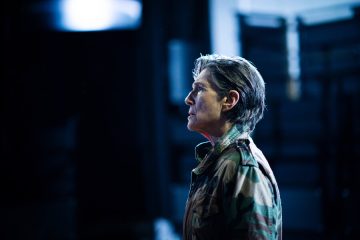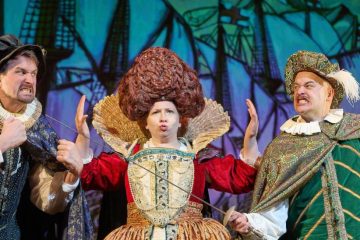
Stephanie Cottle visits The Grand Theatre for Shock Horror — Ryan Simons chilling love letter to classic horror cinema.
There’s a reason The Woman in Black continues to fill seats in its 37th year — it’s one of the only live shows that can offer that particular thrill. The thrill of sitting in a dark theatre, waiting for something, or someone, to leap out at you. Shock Horror: A Ghost Story, which arrived in Blackpool just in time for spooky season, taps into that same pleasure.

The production by Thunder Road Theatre was first created in 2022 and embarked on its first full UK tour in 2023. It’s not hard to see why the company has been successful in securing further tours since its inception. From the go, Shock Horror had the crowd exactly where it wanted them, gifting an early and rather large jump scare (yes, I almost died). From there, audience members leaned into the narrative, half laughing, half braced for the next jolt, as front-facing lights blinded them in anticipation.
The show’s first act hit the mark in pacing and atmosphere. Alex Moran (War Horse, National Theatre; Quality Street UK Tour, Northern Broadsides) delivered a performance grounded enough to carry the emotional weight of the story, but theatrical enough to match the production’s intense and bizarre style. His on-stage chemistry, combined with a dynamic use of lighting, projections, and sound, created the dark world of The Metropol Cinema. Once home to Moran’s character Herbert, the now-rotting shell of a building felt alive — and hungry.

Technically, the production was a real treat. The team’s use of mixed media was seamless. One moment you were watching an old film clip; the next, the scene had somehow spilled onto the stage in real time. The audience was audibly delighted, a testament to the production’s precision and timing. Quick transitions, some happening so deftly in the dark that you genuinely couldn’t see the actors moving into their spots, gave the illusion of supernatural movement.
Echoes of Stephen King, Hitchcock, and Hammer Horror haunt every corner of the show. There are references to The Shining, Nightmare on Elm Street, and IT. It sometimes teeters on feeling derivative, but it’s clear these influences are stitched together with affection, creating a patchwork love letter to the genre itself.

The show built its tension with control. Each scene tightened the screws a little further, and as it approached interval time, the atmosphere was as volatile as the cinema’s ancient, short-circuiting electrics. Post-break, the show seemed less sure of itself. Perhaps it’s inevitable for an intermission in a horror show; once the lights go up, the spell is broken. The audience starts to murmur about the trapdoor and where the mechanisms might have hidden. The second act attempted to rebuild that tension, but it never quite regained the same control.
A ventriloquist’s dummy ‘gifted’ Herbert by his absconding father — became the focal point of the latter half. Technically, the puppetry was impressive: the dummy seemed to move with a life of its own, interacting with film projectors and playing hide-and-seek. Narratively, though, it didn’t carry the weight it might have intended. The doll’s presence tipped the tone toward comedy, drawing laughs where the first act might have drawn gasps.
The father’s logic was questionable at best and downright sadistic at worst — giving a troubled child who has witnessed the death of a priest a warning to stay away from his mentally unwell mother and a terrifying puppet before abandoning him. I mean, who does that?

By the time the curtain fell, some of the narrative threads felt a little tangled. What began as a tale of loneliness, childhood trauma, and escapism into film ended up more like a mess of film on the editing floor. Still, it’s hard to fault a production for aiming high, because when Shock Horror works, and for much of its runtime, it does — it reminds you why we love to be scared in the theatre: the shared gasp, the nervous laughter, the sense that something otherworldly might be lurking in the darkness under your seat.
Shock Horror continues its UK tour until 8th November. Further information and tickets can be found here
Photo Credits: Mark Brenner