A hip hop pioneer says the culture that started in New York in the 1970s has the ability to empower young people in poverty in Blackpool today, and help them avoid criminal behaviour.
An MC, dancer, spoken word artist and director, Jonzi D has changed the profile and influenced the development of the British hip hop dance and theatre scene over the last two decades. He is the founder of Breakin’ Convention, a groundbreaking festival celebrating the very best in hip hop talent and arriving in Blackpool this June.
“Every time we do Blackpool it is such a great environment and it’s interesting because hip hop does come from an impoverished environment and it offers a way for young people to feel good in spite of that,” says Jonzi, speaking ahead of the festival, which celebrates its 20th anniversary this year.
He went on to praise House of Wingz, whose local hip hop crew is performing alongside professionals during Breakin’ Convention. Based in central Blackpool, House of Wingz gives young people opportunities to access hip hop arts culture, including breakdance, rap and graffiti. It is also home to Skool of Street – a charity which subsidises classes for children from low-income families and runs school holiday activity and food programmes.
“House of Wingz are amazing,” says Jonzi, whose likeness has been graffitied on the walls of the performing arts school by local graffiti crew the Panter Bros. “If they could reach even more children that would be amazing.”
Jonzi points out that hip hop originated amid difficult circumstances and was a reaction to a lack of opportunities for young people.
“Hip hop culture started in the Bronx with DJ Kool Herc and his sister Cindy Campbell, who wanted young kids to not be part of the gang violence that existed there at the time,” he says. “There were various gangs within these impoverished areas in New York, where the state had shoved loads of communities together in a small space to build a freeway.
Out of that impoverished and gang environment hip hop emerged because it was needed to distract those young people from gang initiation.
“You had these previously segregated communities – Black people, Puerto Rican people, Dominican people – thrown together and this created this feeling of being protective of their turf because that’s all they had.”
Drawing parallels with the decimation of arts education in the UK over recent decades, Jonzi says that sacrificing music education in the Bronx at this time allowed hip hop to flourish.
“Out of that impoverished and gang environment hip hop emerged because it was needed to distract those young people from gang initiation. That was the purpose. That was the reason why,” Jonzi says. “These parties started by DJ Kool Herc were for young teenagers. Right before they were able to be a part of gangs, they were given another focus and that became hip hop. Instead they formed b-boy crews or graffiti crews.”
Breakin’ Convention is run out of Sadler’s Wells dance theatre in London, where the 2023 festival began earlier this month ahead of touring. National hip hop dance crews including the Dope Male Performance Company and the Freefly Crew, join international acts such as the Netherlands’ Ghetto Funk Collective and South Korea’s Mover crew on the road from mid-May, with Blackpool their penultimate stop on 10th June. Here they will join forces with children and young people from House of Wingz and solo performer Ryan Fenton.
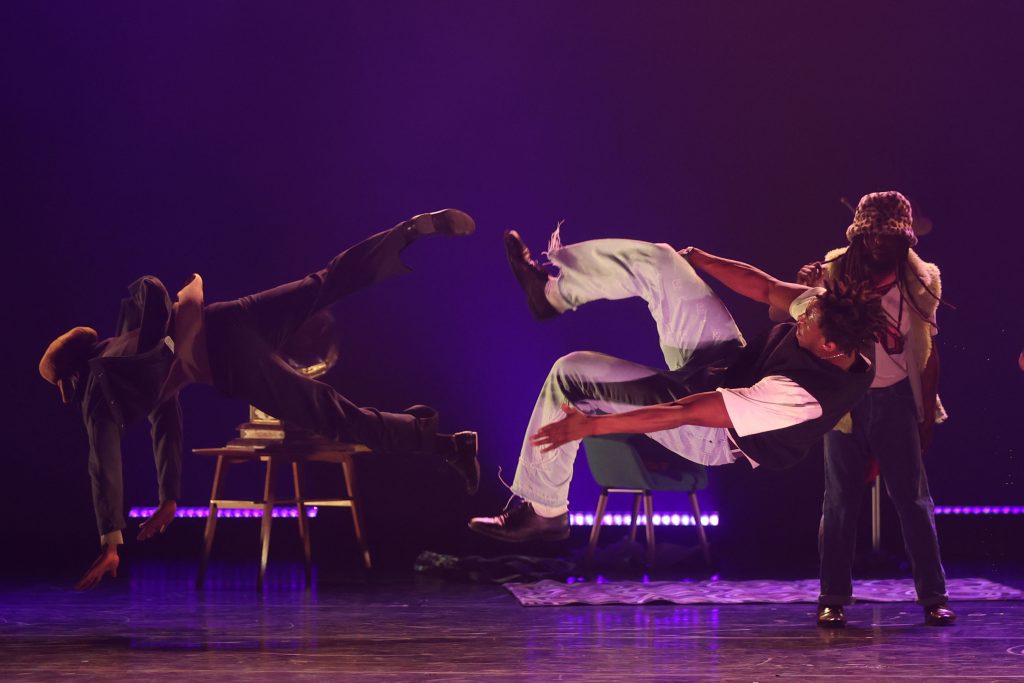
“I do this as a way for the community to come together to perform and see each other perform – see your friends,” says Jonzi. “I think the beautiful thing about hip hop culture is it’s very family-related and sociable.”
He points out that while hip hop began as a youth culture, 50 years on it is a culture in its own right.
“Whenever I do Breakin’ Convention and I see loads of kids on stage and in the audience, it just reminds me that we’re really staying true to the values of hip hop,” he said, adding that anyone who still associates hip hop with anti-social behaviour “may have been living under a rock”. Ultimately, he believes that attitude is borne out of racism.
The pop scene that uses elements of hip hop culture, like rap, does it ultimately to sell units and sell ridiculous ideas.
“Hip hop is the dominant culture in the world today, so to then label it as criminal is short-sighted. I get why people think that, and there’s a real racial element to it when people dismiss this craft and this ultimate skill,” he says, adding that people often confuse commercial hip hop – which he calls pop – with authentic culture.
“That stuff is still out there. In the pop music world it happens extremely, but what I do and the circles I roll in, the values I want to propose, they’re not pop. The pop scene that uses elements of hip hop culture, like rap, does it ultimately to sell units and sell ridiculous ideas. There’s a lot of crap, so-called hip-hop music out there. I’m aware of loads of good hip hop being made consistently but you just don’t see it in a commercial context.”
And that’s Jonzi’s ultimate aim. To bring arts that were developed on the streets into commercial and traditional theatre spaces, such as the Grand Theatre, to bring unity to polarised communities.
“There are a lot of adults or people outside of the culture who probably don’t realise that it’s not focused on criminal behaviour. This is art and art made with the most riskiest of effort. Graffiti artists do the most risky things for the sake of being artistic…
“By bringing it into a theatre space, that counterculture is softened. It’s a great opportunity to have a hip hop jam but not in a space that’s limiting, like a nightclub.”
Breakin’ Convention is at the Grand Theatre on 10th June. Tickets here.